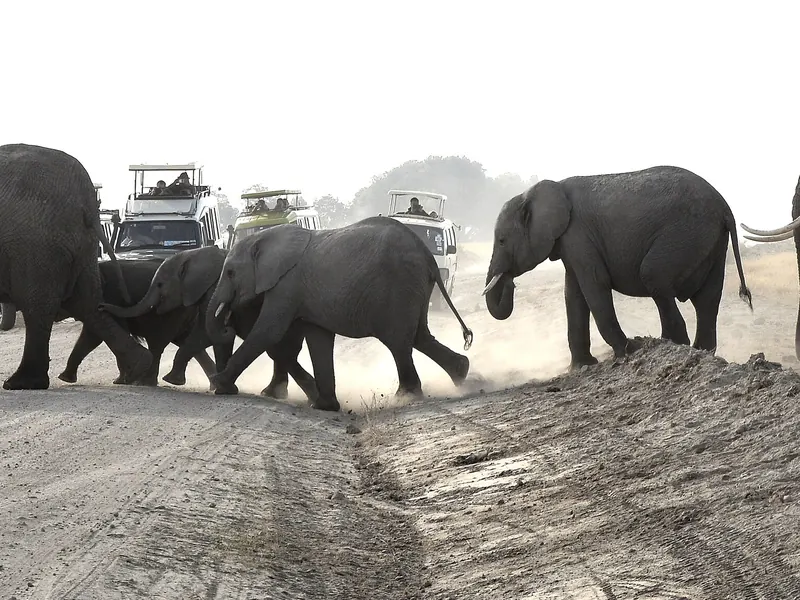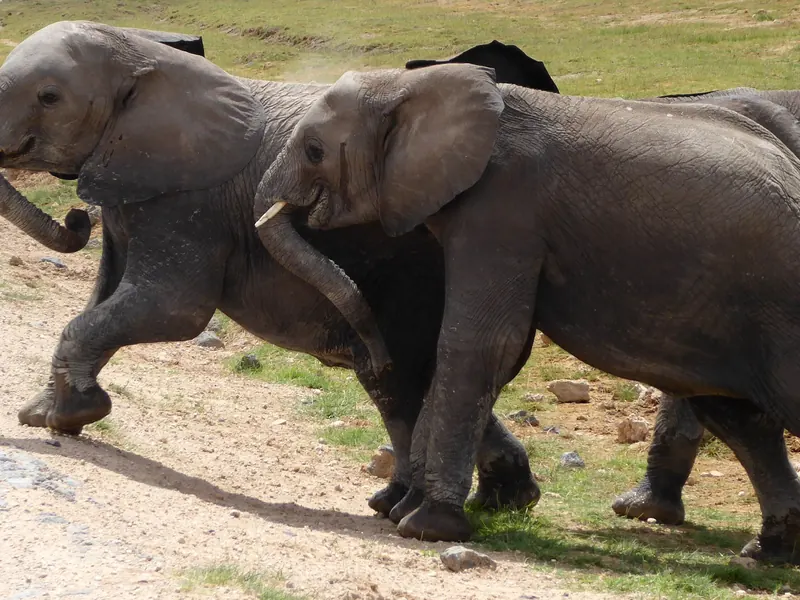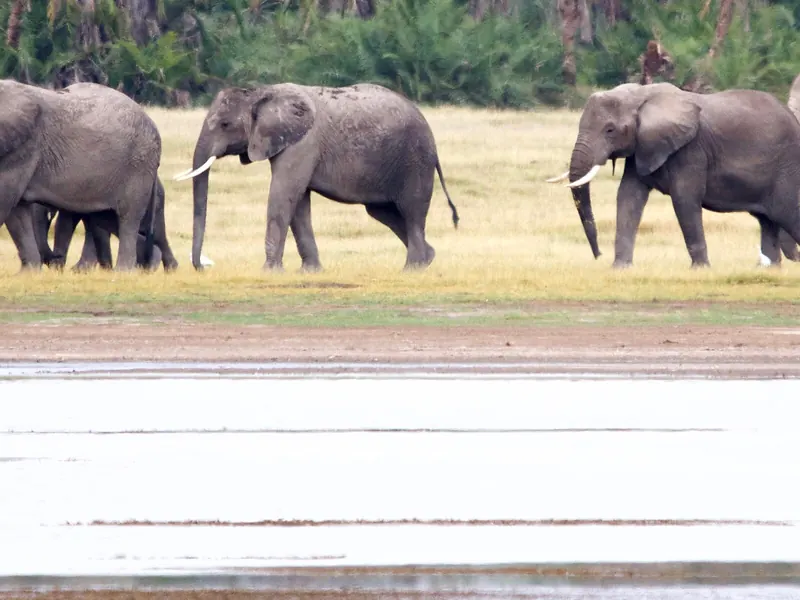
3 days, 2 nights
3 Day Amboseli Safari
A full day at the swamps and Observation Hill, with two dawns for Kilimanjaro.
Amboseli holds four of the Big Five: elephant, lion, leopard and buffalo. Rhino are absent. The plains also carry zebra, wildebeest, Maasai giraffe, gazelles, eland, hippo, cheetah and hyena, and the park has recorded more than 400 bird species. Wildlife is easiest to find in the dry months.
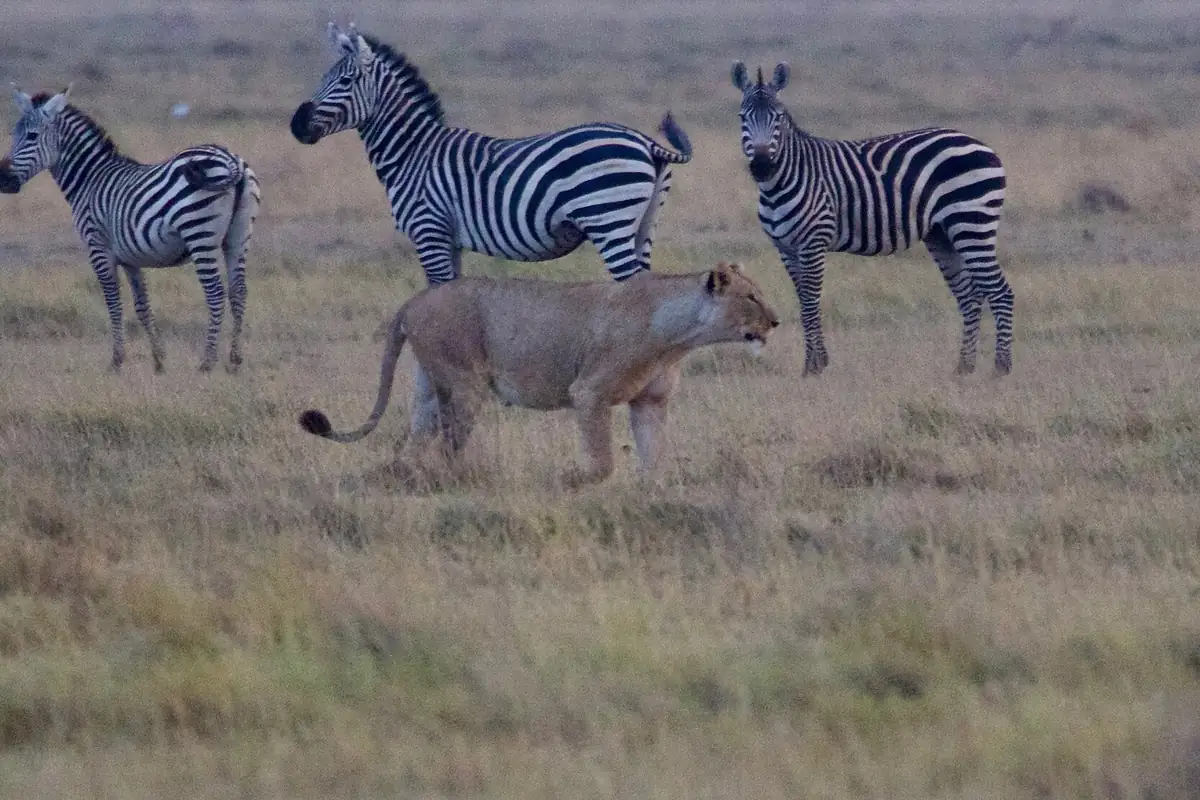
Amboseli is best known for elephants, but the park is a full East African savanna. The plains carry the big grazing herds, the swamps hold hippos and buffalo, and the woodlands and open ground shelter lions, cheetahs, hyenas and a long list of smaller animals. The table gives our honest read on what to expect on a two or three day safari. These are guide estimates, not guarantees.
Amboseli wildlife: where to look, when, and your chances on a 2 to 3 day safari
| Animal | Where and how | Best time | Chance of a sighting |
|---|---|---|---|
| Elephant | Family herds at the swamps, big bulls on the plains | June to October | Very high |
| Plains zebra | The most numerous large herbivore in the May 2024 aerial sample count, on open grass | All year, densest in the dry months | Very high |
| Wildebeest | Large herds, often mixed with zebra on the plains | All year, densest in the dry months | Very high |
| Maasai giraffe | Acacia woodland and open bush | All year | High |
| Grant's and Thomson's gazelle | Open plains, often mixed with zebra and wildebeest | All year | High |
| Eland, impala and buffalo | Eland on the plains, impala in woodland edges, buffalo near water | Dry months for buffalo at the swamps | Moderate to high |
| Hippo | Pools in the swamps, mostly in the water by day | All year | Moderate to high |
| Lion | Plains and swamp edges, often resting by day | Dry months, when wildlife concentrates at the swamps | Moderate |
| Cheetah | Open plains, sometimes on termite mounds | Dry months | Moderate |
| Spotted hyena and jackals | Plains and den sites, most active at dawn and dusk | All year | Moderate |
| Leopard | Shy and mostly nocturnal, in woodland and bush | All year | Low |
| Gerenuk, fringe-eared oryx, lesser kudu | Dry-country species in thorn bush, in low numbers | All year | Low |
| Baboons and vervet monkeys | Woodland and around camps | All year | High |
Three things work together. First, the country is open. The basin floor is flat, with short grass, scattered acacia and very little thick bush, so you see animals from far away. Second, water is scarce but concentrated. Amboseli lies in Kilimanjaro's rain shadow and gets only about 350 mm of rain in an average year, on the park research station's record. Water that flows underground from the mountain wells up in the swamps, and in the dry season large concentrations of wildlife gather there. Third, the park is small, 392 km², so a guide can cover the main swamps and plains in a day.
The park sits inside a bigger ecosystem. Community ranches around it are wet-season dispersal areas for wildlife, and the way those lands are managed affects the park directly. That is why conservation here works with Maasai landowners.
Four of them. Elephant, lion, leopard and buffalo live in Amboseli. Rhino do not. The elephants are the stars, and our guide to Amboseli elephants covers them in depth. Leopards are present but shy, and most guests do not see one. If rhino are on your list, they live in Tsavo West and the Masai Mara, and you can add either to your trip with our Amboseli and Tsavo West Safari or Amboseli and Masai Mara Safari.
Lions use the plains and swamp edges, and they often rest in the shade by day, which is why dawn and late afternoon are the best times to find them. Cheetahs favour the open ground, where they scan from termite mounds. Hyenas and jackals are regular at first and last light. Leopards hunt at night and hide by day, so a sighting is a bonus.
The lion story here is a conservation success. In 2003 the lion population across the Amboseli ecosystem was fewer than 20. Big Life Foundation launched a Predator Compensation Fund that year. It pays Maasai herders for verified livestock losses to predators, on condition that they do not kill predators in retaliation. By 2023 the ecosystem held more than 250 lions. Lions range across the community land around the park, and in the wet season wildlife spreads out onto that land. Maasai tolerance is a big part of why you can see lions at all.
The May 2024 aerial sample count of the ecosystem ranked plains zebra first, then Grant's gazelle, Maasai giraffe, wildebeest and Thomson's gazelle, with elephant, buffalo, impala and eland further down. Lesser kudu, gerenuk and fringe-eared oryx live here in much lower numbers, mostly in the thorn bush, and are a treat for keen spotters.
The herds respond to rainfall, and droughts cut numbers in the ecosystem, which is why counts swing from year to year. The animals also depend on the surrounding community ranches for wet-season grazing. In the dry months the herds draw in to the swamps and you see them in numbers. In the rains they spread out across the plains towards Tanzania and Kajiado. Our best time guide shows how that changes each month.
The Enkongo Narok and Longinye swamps are the park's lifeline, fed by Kilimanjaro's underground springs. Hippos stay in the pools and reeds by day. Observation Hill looks over the Enkongo Narok swamp and the small lake below it, where hippos keep to the reeds, and it is the easiest place to see the whole system at once. Elephants and buffalo feed in the swamp, and the water draws a rich variety of birds. See our Amboseli birds guide.
Savannah baboons live in troops across the basin. The Amboseli Baboon Research Project, founded in 1971 by Jeanne and Stuart Altmann, is one of the longest running studies of wild primates in the world, and the baboons here are recognised individually, much as the elephants are. Vervet monkeys are common near the lodges and camps. Small night animals such as galagos live here too, though you will not meet them on a daytime drive.
Early morning and late afternoon. Predators are most active when it is cool, and the light is soft for photographs. Midday is for resting in the shade and having lunch at camp. Gates open at 06:00 and close at 18:00, so a day has about twelve hours of possible driving and we split it into two drives.
If you want to see the animals at their most active, stay inside or beside the park so you can be at the swamps for first light. A day trip from Nairobi reaches the park mid-morning and leaves by early afternoon, which is workable but gives you less of the cool hours. See our Amboseli Day Trip from Nairobi if a single day is all you have.
We drive slowly, scan the horizon and the shade, and watch the birds and the zebras, because their alarm calls and behaviour often point to a predator. KWS sets the rules that keep everyone safe: stay in the vehicle except in designated areas, keep at least 20 metres from wildlife, never feed animals, keep to 40 km/h, and stay on established tracks. Gates open at 06:00 and close at 18:00. Walks and night drives are not part of a standard park day. Ask us whether a conservancy near your camp offers them.
Our 3 Day Amboseli Safari gives you the time to see all of this, and the Amboseli Group and Family Safari is paced for children. Short on time? The 2 day safari still covers the swamps and the plains twice.
Safaris to consider
3 days, 2 nights
A full day at the swamps and Observation Hill, with two dawns for Kilimanjaro.
3 days, 2 nights
Space for everyone, with a pace that suits children and grandparents alike.
FAQ
Amboseli wildlife includes elephants, lions, cheetahs, buffalo, hippos, Maasai giraffe, plains zebra, wildebeest, gazelles, eland, impala, hyenas, jackals and baboons. Leopards are present but shy.
Amboseli has no rhino and four of the Big Five. Rhino live in Tsavo West and the Masai Mara, which you can add to a trip.
Lions are seen in Amboseli, though sightings are never guaranteed. The ecosystem holds more than 250 lions, and they range onto community land in the wet season, so dry months give better odds.
Amboseli is good for cheetahs because the open plains suit them, and they are regularly reported. Early morning gives the best chance.
Plains zebra is the most common large animal in Amboseli, followed by Grant's gazelle, giraffe and wildebeest, in the May 2024 aerial sample count of the ecosystem. Elephants are the best known.
Night drives are not part of standard Amboseli park drives, which run between gates opening at 06:00 and closing at 18:00. Ask us whether a conservancy near your camp offers night activities.
Send us a WhatsApp message or an email with your dates and group size. We reply with a clear plan and price.