3 days, 2 nights
3 Day Amboseli Safari
A full day at the swamps and Observation Hill, with two dawns for Kilimanjaro.
Game drives, Observation Hill, Maasai community visits and quiet time at the swamps, plus what runs only outside the park.
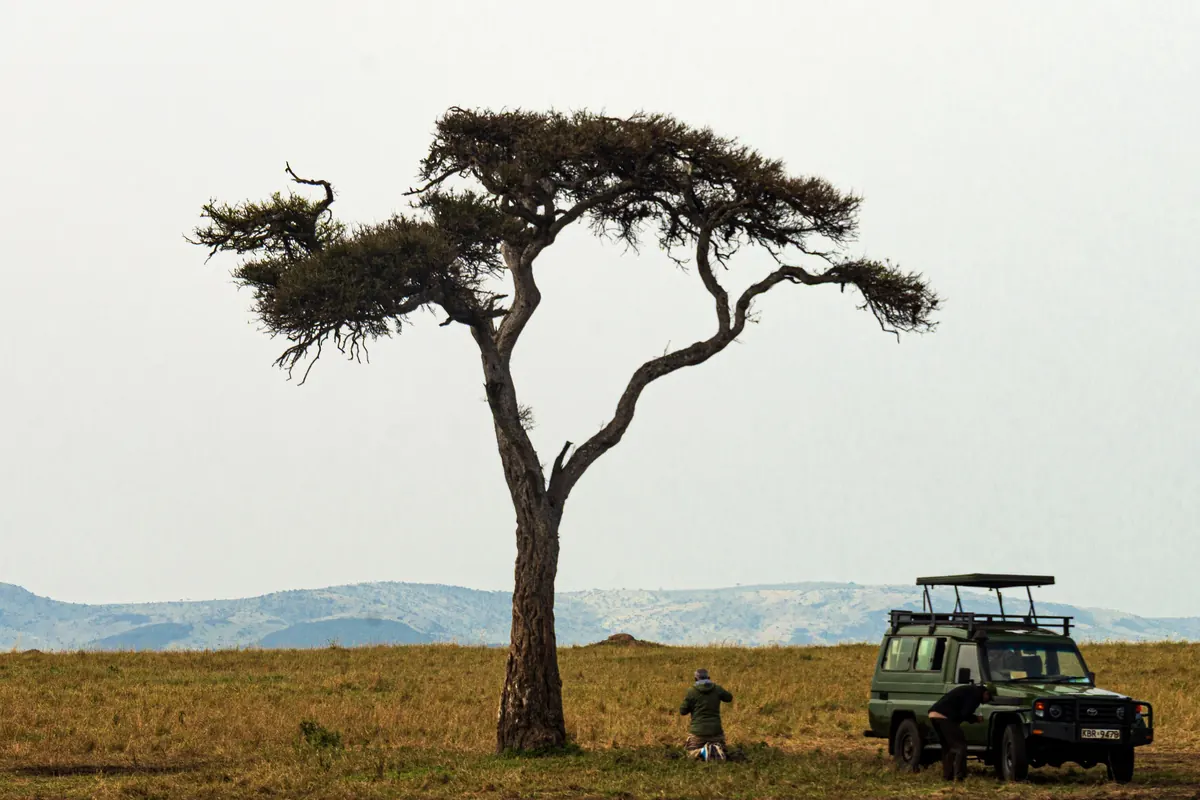
The best things to do in Amboseli are game drives around the swamps, a climb of Observation Hill and a Maasai community visit. Balloon flights and guided walks run outside the park, on community land. Inside the park you stay in your vehicle everywhere except Observation Hill. Dawn and late afternoon give the best light on Kilimanjaro.
Amboseli is a game drive park. It is small, the animals are easy to find and the mountain fills the southern sky. Most of your time is spent in a 4x4 with a pop-up roof, moving slowly between swamps, woodland and open plains. A few well chosen extras sit around that core. The table shows what is on offer and where each one happens.
| Activity | Where | Best time | Good to know |
|---|---|---|---|
| Game drives | Inside the park | Dawn and late afternoon | The core of every Amboseli safari |
| Observation Hill | Inside the park | Early morning or late afternoon | The only place you may step out of the vehicle |
| Maasai community visit | Community land near the park | Midday, between drives | Optional extra. Agree the host and fee first |
| Sundowner | Observation Hill or your lodge | Late afternoon | Depends on your lodge. Ask before you book |
| Hot air balloon | Launches outside the park, near Kimana Gate | Sunrise | Weather dependent. Quoted separately |
| Guided walks | Conservancies around the park | Morning | Not offered inside the park |
| Birdwatching and photography | Swamps and the Lake Amboseli basin | First light | All year, with migrants in the wetter months |
Game drives are the heart of the park. The Kenya Wildlife Service (KWS) keeps the rules short and they protect the animals and your sightings. You stay on established roads. Off-road driving is not allowed. The speed limit is 40 km/h. Doors stay closed, hooting is out and you keep at least 20 metres from wildlife. Day visitors enter after 6 am and leave by 6 pm. If you sleep inside the park, your first drive can start at first light.
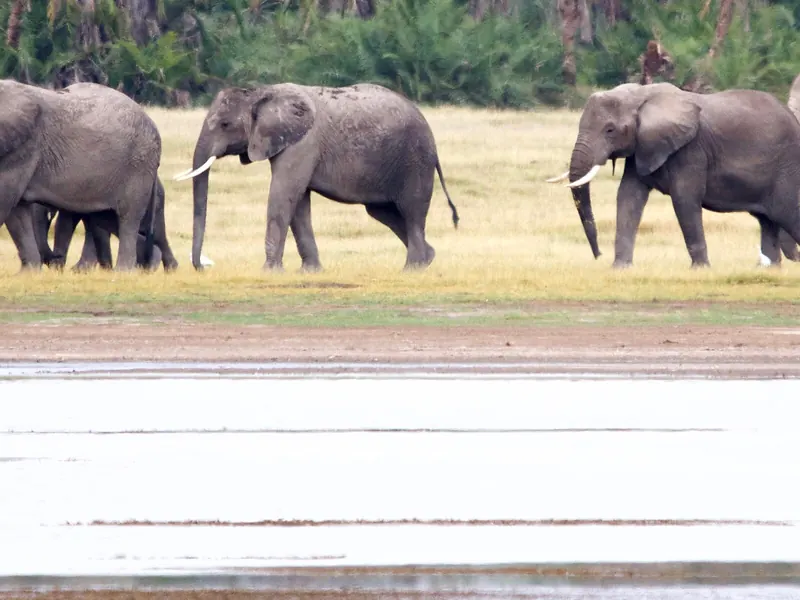
A good guide reads the day. In the dry months elephants and plains game move toward the permanent swamps, Enkongo Narok and Longinye. These swamps are fed by springs linked to Kilimanjaro, and KWS calls them critical to the whole ecosystem. In wetter months animals spread out across the plains. The woodland around Ol Tukai, with its yellow fever trees and doum palms, is a cool retreat that elephants and lions favour.
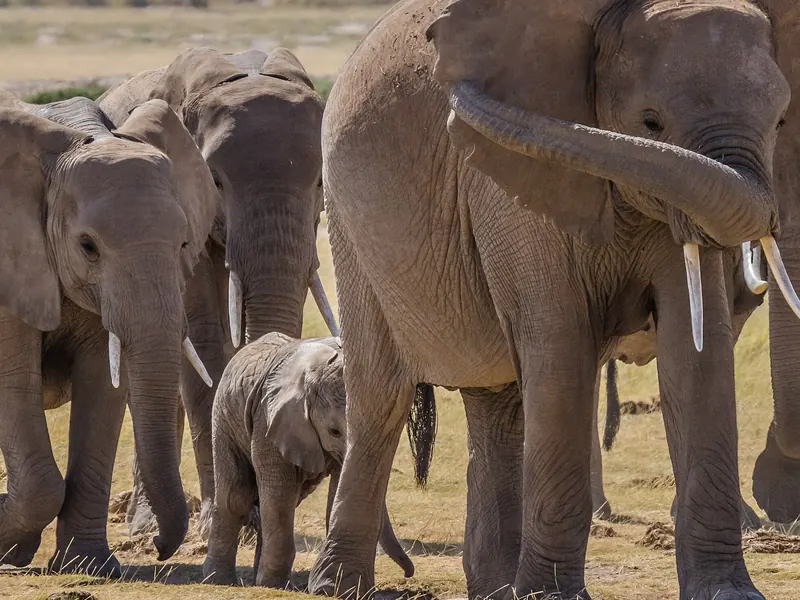
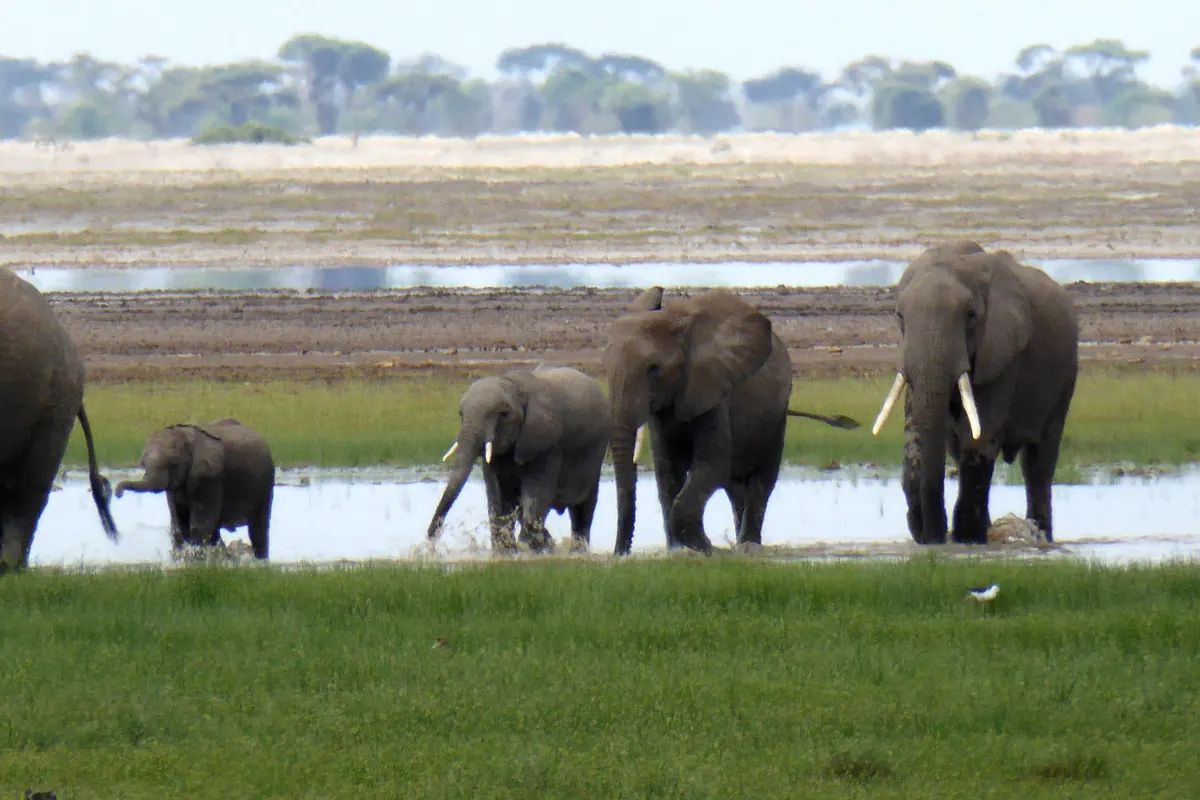
Expect elephants first. Then buffalo, Masai giraffe, zebra, wildebeest and hippos, and with some luck lion, cheetah and spotted hyena. Leopards live here but are seen less often. Rhinos no longer live in the park, so Amboseli gives you four of the Big Five. A dawn drive and an afternoon drive make a full day. In between you rest at your lodge while the midday heat flattens the light.
Yes, and it is the one walk the park allows. Observation Hill, called Nomatior in Maa, is the highest point in the park and sits west of Ol Tukai. KWS links the name to pottery and to the Ndorobo, a community of hunters and honey gatherers who lived on the hill for many years. From the top you look down on the swamps, the plains and the pale floor of the Lake Amboseli basin. On a clear morning Kilimanjaro stands to the south.
It is also the shared stop for many groups, so timing matters. Go early or in the late afternoon and you will have more space and better light. Allow about half an hour. Wear closed shoes, carry water and bring binoculars. Our 3 Day Amboseli Safari builds in an Observation Hill stop, and the Amboseli Luxury Safari gives you a slower walk there with time to look.
Yes. Amboseli lies on Maasai land in Kajiado County, and KWS lists visits to manyattas and cultural centres among the park's attractions. A good visit is hosted by a family or community, gives you time to ask questions and pays the fee directly to the people who host you. Before you go, ask who the host is, what the fee covers and whether buying crafts is optional. Ask permission before you photograph anyone.
We offer a community visit as an optional extra, priced at about USD 25 to 50 per person, depending on the host (checked 17 Oct 2026). Read the full etiquette in our guide to Maasai culture in Amboseli.
Sometimes, and it depends on where you sleep. Sunset falls around 6:30 pm, give or take half an hour through the year. Day visitors must be out of the park by 6 pm, and the only place you may leave the vehicle is Observation Hill. That shapes the options.
We do not promise a bush bar inside the park. Tell us you want a sundowner and we will check what your lodge offers on your dates.
Balloons, yes. Walks, only outside the park. A licensed balloon operator runs flights from a camp just outside Kimana Gate. Check-in is around 5:15 am and the launch is timed for just before sunrise, between about 6:15 and 6:30 am. Flights last between 45 and 90 minutes and end with a champagne breakfast. The whole outing takes four to five hours. Flights need calm wind, no rain and good visibility, children must be at least four years old and the pilot decides on the day. Balloon flights are priced separately. Published non-resident rates run about USD 450 for an adult and USD 350 for a child, and KWS adds a landing fee of USD 80 per adult and USD 40 per child (checked 17 Oct 2026, confirm at booking).
KWS does not list walking as an Amboseli park activity. Guided walks and night drives happen on the community conservancies that border the park, where some camps run them with Maasai guides. If a walk matters to you, tell us before we choose your camp, because it changes where you stay.
Birds. KWS records more than 400 species, including about 40 birds of prey, and names Amboseli one of Kenya's 60 Important Bird Areas. Pelicans, kingfishers, crakes and hamerkops live around the swamps. When the lake basin floods after heavy rain it sometimes draws flamingos, never guaranteed.
Photography. Low sun, dust and elephants crossing open ground in front of a mountain make strong pictures. Our Amboseli Photography Safari is built around dawn and golden hour sessions with beanbag supports on the windows.
Big skies. KWS notes the park's wide skies and low light pollution, which suit stargazing from your camp.
Community conservancies. East of Kimana Gate lies the Kimana community wildlife sanctuary, and a corridor links it to the park so that elephants and other animals can move toward Tsavo. Some camps in the conservancies around Amboseli offer walks, night drives and quiet bush time. Access is usually through the camps themselves, so ask us which camp fits what you want to do.
Elephant history. Amboseli hosts the longest running study of wild elephants anywhere, begun in 1972. Knowing that, a family herd crossing the road becomes more than a pretty sight. Our Amboseli map guide shows the swamps and zones where the herds feed.
| Time you have | What fits | Package |
|---|---|---|
| 1 day | One long game drive around the swamp edges and a picnic or lodge lunch | Day trip from Nairobi |
| 1 night | An afternoon drive, a dawn drive and a first look at the mountain | 2 Day Amboseli Safari |
| 2 nights | Two dawns, a full day, Observation Hill and time at the swamps | 3 Day Amboseli Safari |
| 3 nights | Slower days, bush breakfast, an Observation Hill walk and a private dinner at camp | Amboseli Luxury Safari |
| 3 nights, photography first | Dawn and dusk sessions, landscape time at the hill and the lakebed | Amboseli Photography Safari |
A balloon flight or a walk adds a morning, so allow one more night if you want either. If the plan is still fuzzy, the best time of year also shapes what you do. Our best time to visit guide lays out the months.
Tell us your dates and who is travelling and we will build the days around what you most want to see.
Safaris to consider
3 days, 2 nights
A full day at the swamps and Observation Hill, with two dawns for Kilimanjaro.
4 days, 3 nights
Dawn and dusk shoots, positioned for elephants and Kilimanjaro.
FAQ
The main thing to do in Amboseli is a game drive. You spend most of your time in a 4x4 with a pop-up roof, following elephants, buffalo, giraffe and plains game between the swamps, the woodland and the open plains.
In Amboseli you can leave the vehicle only at Observation Hill. KWS rules require you to stay in your vehicle with the doors closed everywhere else in the park.
Amboseli National Park has no walking safaris, because KWS does not list walking as a park activity. Guided walks run on community conservancies around the park, and only some camps offer them.
Amboseli balloon flights launch from a camp just outside Kimana Gate and fly at sunrise when the weather allows. They are priced separately, at about USD 450 for a non-resident adult plus a KWS landing fee of USD 80 (checked 17 Oct 2026).
A Maasai village visit is an optional extra on our Amboseli packages, priced at about USD 25 to 50 per person depending on the host. We agree the host and fee before you go.
Send us a WhatsApp message or an email with your dates and group size. We reply with a clear plan and price.