Mount Kilimanjaro views from Amboseli
The best Kilimanjaro views from Amboseli come at dawn, roughly 06:00 to 09:00, before cloud builds around the summit. Stand on Observation Hill, at the swamp edges or on the open plains near Ol Tukai. June to October and January to February give the best odds. Plan two or three mornings.
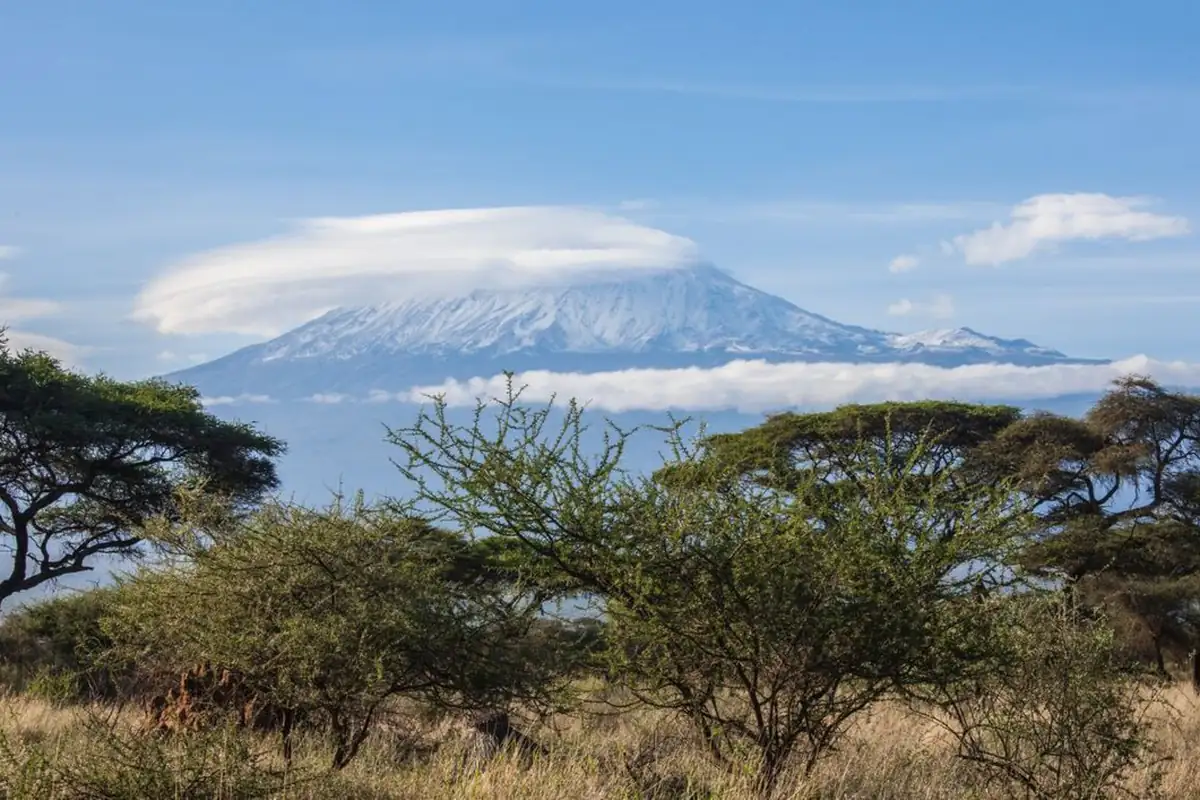
Where is Kilimanjaro in relation to Amboseli?
Kilimanjaro is a dormant volcano in Tanzania, and it rises just across the border from Amboseli. At 5,895 metres it is the highest mountain in Africa and the highest free-standing mountain in the world. From the Amboseli plains you look south at its snow-capped Kibo cone with open country in between. The ecosystem straddles the border, and the mountain feeds the park: its underground aquifers supply the springs that keep the Enkongo Narok and Longinye swamps full.
That is the Amboseli picture: elephants in the foreground, the highest peak in Africa behind them. It is also why guests ask us one question first: will the mountain be out?
What time of day is best for Kilimanjaro views?
Dawn. In every month the cloud around the summit is thinnest from about 06:00 to 09:00 and thickest in the afternoon. Sunrise falls at roughly 06:30 all year because Amboseli sits close to the equator, so the clear window is short. Late afternoon can also work, but it is less reliable than the morning.
Park gates open at 06:00 and close at 18:00, unless you are staying overnight. If you are sleeping inside the park, you can leave at first light. If you are on a day trip, you will reach the swamps later and the mountain may already have its cloud. That is why we suggest at least one night. Our 2 Day Amboseli Safari gives you one dawn, and the 3 Day Amboseli Safari gives you two.
Which months give the clearest Kilimanjaro views?
On cloud-cover models, the clearest mornings are in August and September, with roughly four in ten clear. October, July, June, February and March follow. January and February are also reliable. April, November and December are the cloudiest, with about one clear morning in ten. Nobody publishes a measured count of clear days, so treat these as a relative guide.
One more point: summit snow is usually deepest in the rains, from March to May and in November and early December. The mountain shows itself less often then, but when it does, it is at its whitest. Our best time to visit guide lays out the whole year.
Where are the best viewpoints for Kilimanjaro in Amboseli?
The mountain is visible from almost anywhere in the park. The best spots add something in front of it.
Kilimanjaro viewpoints in and around Amboseli
| Viewpoint | What it is | Best for | Tip |
|---|---|---|---|
| Observation Hill (Nomatior) | The park's highest point and the one place visitors step out of the vehicle | Mid-morning panoramas, swamps and herds below, mountain behind | Go early or late to avoid the midday crowd |
| Enkongo Narok swamp edges | Flat, open water and reeds with elephants feeding | The classic frame of elephants with the mountain behind | Stay in the vehicle, work from the window |
| Ol Tukai woodland | Yellow fever trees and doum palms near the main lodges | Framing the mountain with trees, calm early light | Good for a first-light stop before breakfast |
| Open plains and the Lake Amboseli bed | Wide, empty horizon in every direction | Clean landscapes with no clutter, long shadows | Dust rises on dry days, so protect your gear |
| Lemomo Hill, Kitenden conservancy | About 3 km outside the park boundary, KWS calls it the highest observation point | A high panorama of the park and ecosystem | Access runs through the conservancy, so ask first |
Observation Hill
Observation Hill, called Nomatior in Maa, is the best-known stop. KWS lists it for panoramic views and for a cultural history linked to the Ndorobo community. From the top you look over the Enkongo Narok swamp and the small lake below it, where hippos keep to the reeds. It is one of the few places in the park where you may get out of the vehicle, and it is where most visitors stop, so we time it for a quieter hour. We include it on our 3 Day Amboseli Safari.
The swamp edges and Ol Tukai
Elephants feeding in the swamp with Kilimanjaro behind them is the frame everyone wants. It works best when the guide positions the vehicle so that the herd, the water and the summit line up. Ol Tukai, the old woodland of yellow fever trees and doum palms, gives you trees to frame the mountain, and several lodges in and around this area, such as Ol Tukai Lodge, give you the view from your doorstep.
Lemomo Hill and camp terraces
Lemomo Hill, in the Kitenden conservancy, is about 3 km from the park boundary and is the highest observation point in the ecosystem, per KWS. Access runs through the conservancy, so ask us first. Some camps are built for the view. Kilima Safari Camp puts the mountain first, and Tortilis Camp sits with Kilimanjaro at the doorstep. A cup of tea on a terrace at first light is a very good way to wait for the cloud to lift.
How do I photograph Kilimanjaro from Amboseli?
- Be in position before sunrise. The best light and the clearest sky both come early.
- Bring two lenses. A wide angle for landscapes, and a 100 to 400 mm zoom to compress the mountain behind elephants.
- Use a beanbag. Our pop-up roof vehicles give every guest a window, and a beanbag keeps long lenses steady.
- Shoot at eye level. Low angles make elephants bigger against the peak. Your guide positions the vehicle for this.
- Protect your gear. Dust is the main enemy in the dry months. Bring lens cloths, a blower and a sealed bag.
- Do not rush off. Cloud can open and close again within minutes. Wait a little before you move on.
The Amboseli Photography Safari is built around these hours, with three dawns and time at Observation Hill.
What if Kilimanjaro is hidden by cloud?
It happens, and no guide can control it. Cloud often sits on the summit while the base is visible, and it can lift for a few minutes later in the morning. Keep watching the horizon as you drive. The park still delivers, because the elephants, giraffe, buffalo and birds do not depend on the weather over a mountain in Tanzania. The ice cap has also shrunk a great deal since the early 1900s, which is one more reason to go and see it while it still shines.
What does a mountain-first day look like?
We build the day around the light, not around breakfast. A typical plan on our 3 Day Amboseli Safari runs like this:
- Dawn, 06:00 to 08:00: a drive to the swamp edges while the summit is clearest. Elephants are often moving to feed at this hour.
- Mid-morning: back for breakfast, or a packed breakfast in the vehicle if cloud is lifting and we do not want to leave.
- Late morning: Observation Hill for the panorama, when the swamps and herds below are in full view.
- Midday: rest at camp. Animals rest too, and the summit is usually under cloud by now.
- Late afternoon: a second drive, with a last look at the mountain before the gates close at 18:00.
Dawn on the plains is cool, so bring a warm layer even in the dry months. Bring a wide-brimmed hat too, because the same plains are bright and dusty by mid-morning.
How many nights do I need to see Kilimanjaro?
Two nights give you two dawns, and three nights give you three. Each extra morning raises your odds. If you can only stay one night, choose August or September, or January or February, and be at the swamps at first light.
Read our guide to Amboseli elephants to see what stands in front of the mountain, and our wildlife guide for the rest of the park. Then tell us your dates and we will plan your mornings around the mountain.
Safaris to consider
Plan it with us
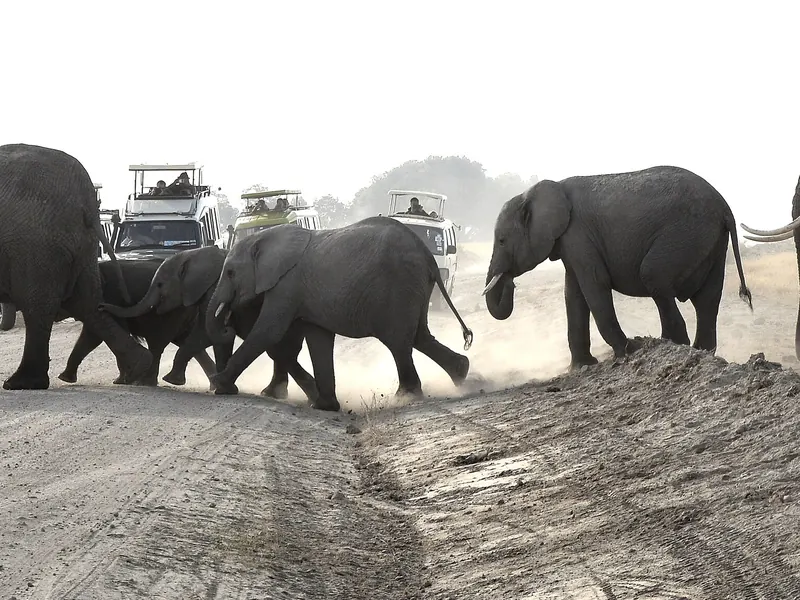
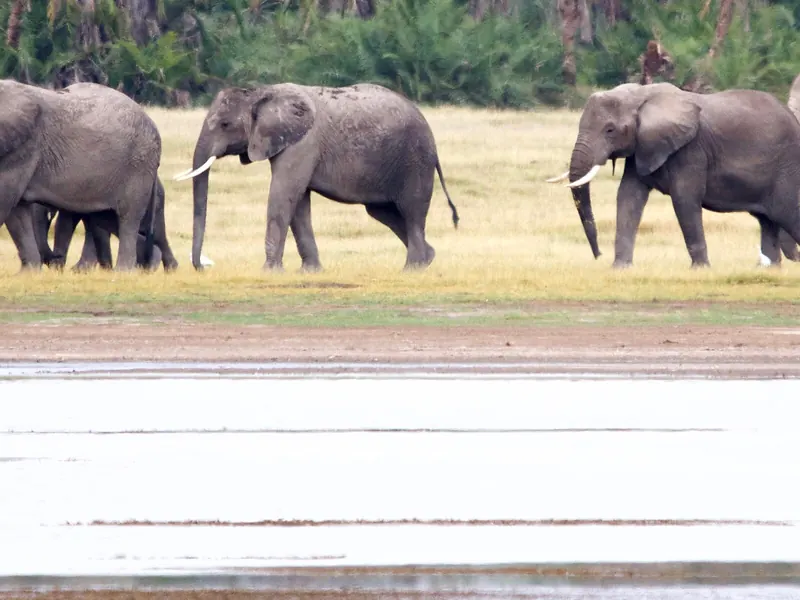
3 days, 2 nights
3 Day Amboseli Safari
A full day at the swamps and Observation Hill, with two dawns for Kilimanjaro.
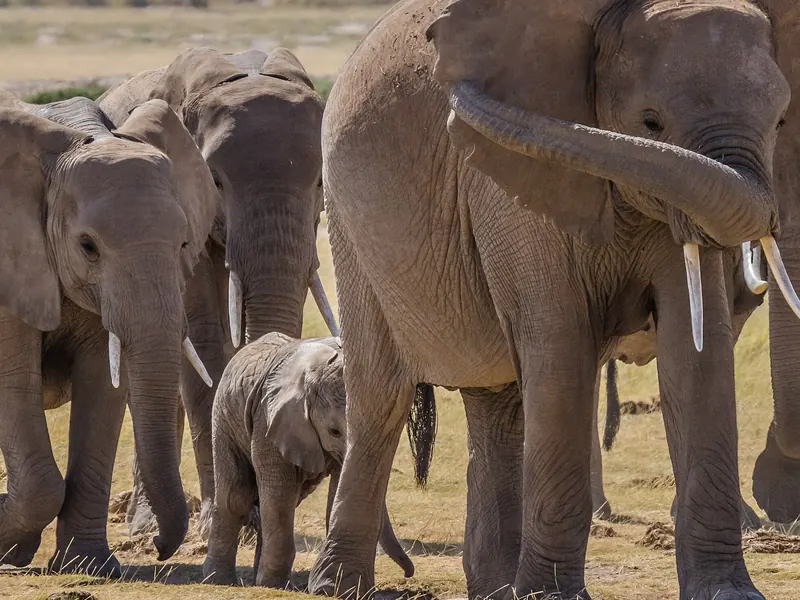
4 days, 3 nights
Amboseli Photography Safari
Dawn and dusk shoots, positioned for elephants and Kilimanjaro.
FAQ
Frequently asked questions
What is the best time of day to see Kilimanjaro?
The best time of day to see Kilimanjaro from Amboseli is dawn, from about 06:00 to 09:00. Cloud usually builds around the summit by mid-morning and is thickest in the afternoon.
Which month is best for Kilimanjaro views?
August and September are the best months for Kilimanjaro views from Amboseli, with the clearest mornings on cloud-cover models. January, February and June to October are also good, and April, November and December are the cloudiest.
Where is the best place to see Kilimanjaro in Amboseli?
Observation Hill is the best place to see Kilimanjaro in Amboseli for the panorama, and the swamp edges give elephants with the mountain behind. Open plains and the lake bed give clean landscapes.
Can I see Kilimanjaro on a day trip?
Sometimes. A day trip reaches the swamps after the clearest hours, so staying a night improves your odds. See our 2 Day Amboseli Safari.
Is Kilimanjaro in Kenya?
Kilimanjaro is in Tanzania, just across the border from Kenya, and is seen from Amboseli. At 5,895 m it is the highest mountain in Africa.
Ready to plan your Amboseli safari?
Send us a WhatsApp message or an email with your dates and group size. We reply with a clear plan and price.